


Specialists In Swimming Pools & Landscape Designs On Slopes & Large Acreage Blocks

Landscape Design +
Project Management


Outdoor Fireplace & Fire Pit Design
Fire features that shape how outdoor spaces are used and experienced
Outdoor fireplaces and fire pits can do more than provide warmth. When positioned and resolved properly, they become a clear gathering point, extend how long outdoor areas are used through cooler periods, and create a stable focal point within the landscape.
At PARC Concepts, fire features are designed as part of the overall outdoor layout — shaped by where people will actually sit, how the space connects to the home, and how the fire zone performs over time.

Fire Features as Part of Outdoor Use
Fire draws people in, but the success of a fire feature is rarely about the unit itself. It comes from how the space is organised around it.
In many projects, placement is guided first by where the outlook is — because that’s where people naturally choose to sit for longer periods. A well‑positioned fire pit or fireplace supports both comfort and view, rather than competing with it.
Fire zones are also resolved in relation to the house and surrounding outdoor living areas — such as kitchen and dining spaces — so that the landscape can function more flexibly. When multiple uses are planned together, the garden becomes more efficient to build, easier to maintain, and less reliant on separate “single‑purpose” zones over time.
Placement, Flow & Long‑Term Performance
In practice, the most common issues we see with outdoor fire features are caused by location and site conditions, not aesthetics.
A fire zone needs to be resolved with consideration for:
-
how people move through the space (circulation and approach)
-
how close seating sits to the heat source (comfort and usability)
-
wind exposure and smoke drift over time
-
ground conditions and drainage (so the area remains usable after rain)
-
surface materials and how they perform under heat and frequent use
These decisions are typically resolved early, because they influence not only the fire feature itself, but the layout and buildability of the surrounding landscape.
This approach also supports a more efficient and lower-maintenance landscape over time. By resolving fire features as part of a broader layout—rather than as isolated additions—spaces can operate more flexibly, reducing duplication of materials, construction, and ongoing care. This aligns with a more considered garden design approach, where long-term use, maintenance, and cost are balanced from the outset.


Integrating Fire Features with Retaining Walls and Level Changes
On sloping sites — or where a garden needs stronger definition — fire features are often integrated with retaining elements to create a clearer outdoor room.
This may include:
-
sunken fire pits that create enclosure and reduce wind exposure
-
raised fire platforms that improve outlook and define zones
-
seating walls integrated into retaining structures for comfort and permanence
-
tiered or terraced settings where level change becomes the structure of the space
Rather than treating retaining walls as purely structural, they can help make a fire zone feel resolved, intentional, and more comfortable to use.
Types of Outdoor Fireplaces & Fire Pits
Fire features may take different forms depending on the site, the layout, and how the space is used.
This may include:
-
Built‑in outdoor fireplaces (brick, stone, concrete, or clad)
-
Freestanding backyard fire pits for social zones or garden edges
-
Smokeless fire pit designs where smoke management and comfort are priorities
-
Gas, wood, or electric outdoor fireplaces depending on practical requirements and maintenance expectations
-
Indoor–outdoor fireplaces that support stronger connection between internal and external living zones
-
Custom surrounds including seating walls, firewood storage, and integrated lighting
The fire type is typically finalised after placement and spatial planning are resolved, ensuring the feature supports the space rather than determining it.

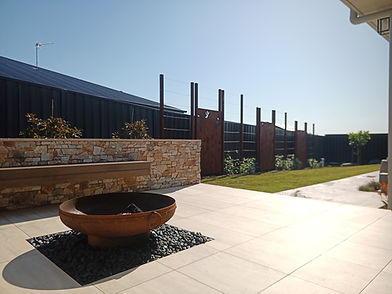
Materials, Safety & Australian Conditions
Outdoor fire features must be durable and appropriate for the environment they sit within.
Material and safety considerations often include:
-
heat‑rated finishes and non‑combustible surrounds
-
surface selection for comfort, traction, and heat exposure
-
separation from nearby planting and built elements
-
wind conditions and how the space behaves seasonally
-
bushfire‑prone land considerations, including BAL‑related material suitability where relevant
Where built structures are involved, fire features may also influence construction or approval pathways depending on how they are defined, located, or built. Considering this early helps avoid redesign and supports a smoother build process.
How Fire Features Relate to the Wider Landscape
Fire elements are rarely resolved in isolation. They are often considered alongside other outdoor zones so the overall landscape functions as one system.
This may include relationships to:
-
outdoor kitchens and dining areas
-
garden rooms or sheltered outdoor living spaces
-
pool or spa environments (where warmth supports use before or after water)
-
courtyards and enclosed spaces where scale and smoke movement matter
-
acreage or sloped sites where retaining and terraces define the landscape structure
The goal is always the same: a fire feature that feels like it belongs to the landscape, not one that has been “added on” after everything else is decided.


Our Fire Pit & Outdoor Fireplace Design Process
01
Consultation & Site Review
We start with a call to understand your goals, desired fire style (e.g. wood outdoor fireplace, gas fire pit), and budget. Then, we assess your site in person or virtually.
02
Concept Development
We provide:
-
Custom fire feature layouts and locations
-
Recommended materials and fuel types
-
Landscape context (e.g. seating, privacy planting, lighting)
03
Final Plans & Documentation
You’ll receive a final design package tailored to your property, with optional documentation for DA/CDC approvals or build-ready construction drawings.
04
Build Support (Optional)
If desired, we remain involved throughout the construction phase, coordinating with builders, landscapers, or trades to ensure your outdoor fireplace or fire pit is executed to spec.
Considering the Next Step
Fire features are most effective when they are considered as part of the broader landscape, rather than introduced independently.
Understanding where they sit within the layout, how they relate to surrounding spaces, and how they will be used over time is typically the first step in shaping a more resolved and usable outcome.
View our landscape design approach
Outdoor Fireplae FAQ
Is an outdoor fireplace or fire pit worth it?
Often, yes — when it is positioned properly. Fire features can extend seasonal use and provide a consistent gathering point, particularly when resolved as part of the overall layout.
Can you have a fire in your backyard in NSW?
Backyard fire pits and barbecues are permitted statewide without EPA approval if using dry seasoned wood or gas. Anything else that causes excessive smoke is not permitted. Local councils can take action if fire pits produce excessive smoke.
What’s better, a fire pit or a chiminea?
Both have benefits:
-
Chimineas direct heat forward and smoke upward, offering a more contained, wind‑resilient experience.
-
Fire pits provide open flames and broad, ambient warmth, ideal for group seating with lower maintenance; with 3m clearances from structure.
Placement, prevailing winds and privacy screening should guide the choice.
What is an outdoor fireplace called?
Commonly a built-in outdoor fireplace, masonry heater, or combustion heater; in landscape plans, we specify as a 'fixed outdoor heating appliance' with venting and setback details for certifier compliance.
How far does an outdoor fireplace need to be from the house?
A practical planning distance is 3–5 metres from the home to support ventilation, comfort and safe separation.
Minimum 3m from combustible materials (walls, eaves, decks) per NCC and RFS guidelines, plus 1.8m from boundaries. Our landscape design plans detail the exact setbacks tied to your site survey (AHD) and BAL rating.
Important: Actual required distances vary based on materials, surrounding structures, wind exposure and bushfire‑prone land categories.
Which direction should an outdoor fireplace face?
Ideally, it should face away from prevailing winds so smoke drifts clear of your home and neighbouring yards, while directing warmth and sunlight toward your seating area and private open space.
In locations such as Newcastle, Lake Macquarie or Port Stephens, prevailing breezes can shift seasonally, so orientation should be checked at the planning stage.
Do outdoor fireplaces need to be vented?
Yes, built‑in fireplaces require appropriate venting or a flue system to manage smoke safely.
Fixed masonry units require a chimney/flue clearing roofline by 600mm+ per NCC Part 3.7.3; portable fire pits don't, but all must minimise smoke under Clean Air Regulation.
Portable fire pits don’t require venting, but careful placement improves comfort.
Are fire pits legal in Australia?
Fire pits are generally legal for residential use. In NSW, they can be used without formal approval when:
-
burning dry wood or gas
-
producing minimal smoke
-
avoiding use during Total Fire Bans
Reference: NSW RFS Fire Permit Guidelines
Pro tip: Your local council may have extra guidance on smoke drift and neighbour impact.
What are the disadvantages of a fire pit?
Common considerations include:
-
smoke drift on windy evenings
-
higher fuel use
-
ash cleanup
-
restrictions during Total Fire Bans
These can be improved with thoughtful placement, suitable materials and low‑smoke timber choices.
Which gives off more heat, a fire pit of chiminea?
A chimineas produces more concentrated, directional heat (up to 30% efficient) because of its enclosed structure. A fire pit provides broader ambient warmth, which is more suitable for group settings but can be more affected by wind.
Where should you not put a fire pit?
Avoid placing a fire pit:
-
under eaves or roof overhangs
-
within 3 metres of structures, fences or trees
-
in narrow circulation routes
-
in areas affected by drainage or pooling water
Pro tip: Homes in bushfire‑prone areas should review BAL considerations and avoid placing fire features near combustible vegetation.
What do you put in the bottom of a firepit?
Most setups use a base layer of gravel, crushed stone, or fire-rated sand for drainage (integrates with ag-pipe systems), topped with lava rock for airflow and ember containment. Our backyard garden design planting schedules specify non-combustible surrounds.
What is the best fire pit for a backyard?
The best option depends on your outdoor layout and how you prefer to entertain. Durable materials (steel, masonry), a spark screen, and an appropriate size for your seating area are practical starting points.
Permanent masonry or steel pit with spark screen, gas conversion option, and 3m+ clearances, tailored to your estate covenants, BASIX water efficiency, and BAL compliance for seamless DA/CDC approval.