


Specialists In Swimming Pools & Landscape Designs On Slopes & Large Acreage Blocks

Landscape Design +
Project Management


Large Garden & Acreage Landscape Design
Resolving Scale, Access and Interconnected Systems Across the Site
Landscape design on acreage properties is shaped by scale.
As sites increase in size, elements such as access, drainage, levels and planting no longer operate in isolation. Decisions in one area begin to influence conditions across the entire property.
This sits within a broader Landscape Design approach, where the site is resolved as a coordinated system rather than a series of separate components.
On more complex properties — including rural landscapes and larger residential acreages — slope is often only one of several interacting conditions that need to be resolved together.
Acreage landscape design focuses on understanding how these relationships interact across the full extent of the site, so decisions about layout, infrastructure and long-term use remain connected.

Understanding How Acreage Sites Actually Work
On acreage properties, the site is not defined by a single condition, but by how multiple factors overlap.
These may include:
-
long access routes and driveways
-
level variation across the site
-
drainage paths extending over large areas
-
ground variability and soil conditions
-
exposure to wind, sun and weather
-
building envelopes and siting constraints
-
bushfire-prone land considerations
-
vegetation protection or habitat constraints
Where these conditions are not considered together, the result is often disconnected decisions — leading to inefficiencies, increased construction complexity and ongoing maintenance challenges.
Before resolving layout or introducing features, these conditions are first understood at a site level.
This includes how ground conditions, drainage behaviour and broader environmental factors influence what is realistically achievable.
Why Acreage Sites Become More Complex Over Time
On acreage properties, complexity does not usually come from a single element. It develops as multiple site systems begin to overlap across a larger area.
What may be contained on a suburban site — such as drainage, retaining, access or planting — often affects multiple zones across an acreage property.
Access, levels, drainage and long-term use need to remain connected across the entire site rather than resolved as isolated works.


Access as Landscape Infrastructure
On acreage and rural properties, access is not simply a connection to the house — it becomes a defining landscape system.
As distances increase, movement across the site involves:
-
long driveways and arrival sequences
-
changing gradients
-
connections between house, pool and outbuildings
-
construction and servicing access
Acreage does not automatically provide easy access. Where slope, bushland or uneven terrain are involved, access can become complex.
Driveway length, turning areas, surface selection and drainage behaviour begin to influence how the rest of the landscape functions.
When considered early within a broader Landscape Design strategy, access can be resolved as an integrated system.
Drainage Across the Site
On acreage and rural properties, water rarely affects a single location. As scale increases, drainage operates across the entire site.
Rainfall and runoff travel over distance, interacting with access routes, planting zones and level changes.
See Site Analysis and Ground Conditions in Landscape Design
Without a coordinated level strategy, water may become concentrated or redirected, creating pressure on access, retaining and low points.
For this reason, drainage is considered as part of the overall site structure — not added after layout decisions.
On some acreage sites, water movement can also be used to support planting and long-term landscape performance.


Landform and Large-Scale Level Change
Level change becomes part of a broader system shaping how the landscape is structured.
Across larger properties, landform varies over distance, influencing:
-
access and circulation
-
drainage paths
-
structure placement
-
long-term stability
See how level change is resolved in Slope Landscape Design
Without a coordinated approach, localised changes such as cut and fill or terracing can impact other parts of the site.
Landform is resolved as part of a broader strategy — with retaining and level transitions acting as responses rather than isolated solutions.
Planting and Maintenance as a Response to Scale
On acreage and rural properties, planting and maintenance are shaped by scale.
As landscape size increases, high-maintenance planting and intensive irrigation become less practical.
Water availability is often limited — influencing what can be planted and how the site performs.
This often results in:
-
climate-adapted planting
-
selectively irrigated zones
-
low-intervention areas
Drainage and water movement can also be used to support planting rather than removed entirely.
This positions planting as a response to broader landscape systems — including drainage, landform and access.
The detailed application of planting, irrigation and outdoor use sits within Garden Design.


Staging, Flexibility and Long-Term Planning
On larger properties, it is rarely practical to resolve the entire landscape in a single stage.
Projects are often delivered progressively, with budgets, priorities and conditions evolving over time.
Early design decisions must consider:
-
access and infrastructure
-
drainage direction
-
long-term connections
-
staging of works
Without coordination, staged delivery can result in inefficiencies and disconnected spaces.
Flexibility is critical, particularly as regulations, costs and environmental conditions change.
A structured design framework allows the landscape to evolve while remaining cohesive.
When Systems Begin to Combine
Individually, each condition may be manageable.
As systems begin to overlap — including access, drainage, landform and planting — overall complexity increases.
Planning constraints such as building envelopes, bushfire regulations, vegetation protection and waterways may also influence outcomes.
See how site conditions influence outcomes in Site Analysis and Ground Conditions in Landscape Design
See Hunter Valley acreage landscape and pool case study
At this point, design shifts from isolated decisions to a coordinated site strategy.

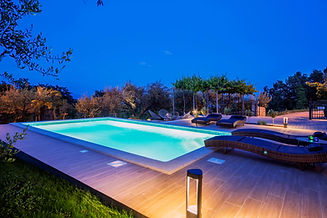
Integrating Pools and Outdoor Living Within Acreage Landscapes
On larger properties, pools and outdoor living spaces are shaped by the broader site systems.
Placement is influenced by:
-
access and construction feasibility
-
level transitions
-
drainage
-
relationship to the house
See how this integrates with Custom Pool Design
Learn about Landscape Features Requiring Approval
When resolved early, these elements become part of the overall landscape — not additions to it.
Our Process: From Raw Land to Refined Landscape
Designing for acreage and large-scale gardens requires more than just creativity, it takes clarity, coordination, and expert spatial planning. Our process is collaborative, grounded, and tailored to the unique demands of larger properties.
01
Clarity Meeting on Teams
We begin with a 30-minute video or phone consultation to understand your goals, lifestyle, and how you’d like to use your outdoor space. We’ll discuss the scope of your property, any must-haves (pools, courts, gardens, etc.), and your desired investment.
02
Site Consultation
Acreage blocks come with their own set of opportunities and challenges, from sun orientation and wind exposure to slopes and drainage. We visit your site (in person or virtually), assess conditions, and gather essential data to inform the design.
03
Concept Design
We develop a custom landscape concept plan with:
-
Functional zoning and spatial layout
-
Recommendations for structures, hardscaping, and materials
-
Preliminary planting direction
-
Scalable design options for staged implementation.
We’ll walk you through the design and refine it based on your feedback.
04
Final Plans & Documentation
Once approved, we provide a final plan package tailored to your needs, from planting schedules and materials specifications to council-ready drawings for DA/CDC (if required). Optional add-ons like lighting concepts, irrigation plans, and 3D renders are also available.
05
Construction & Project Support (Optional)
We can remain involved throughout the build phase to ensure the design is executed as intended. While we don’t construct directly, we work alongside your chosen builder or recommend trusted local professionals to bring the vision to life.
Where Site Decisions Matter More Than Features
On acreage sites, most issues are not caused by individual elements — they come from how decisions are made at the beginning.
Treating access as an afterthought, introducing planting without considering water availability, or resolving drainage after levels have been set can all lead to increased cost, inefficiency and ongoing maintenance challenges.
On larger properties, these effects are often magnified.
Because systems such as access, drainage, landform and planting operate across the entire site, decisions made in one area can affect how the rest of the property functions over time.
Our work focuses on understanding how the site behaves first — including movement across the landscape, water distribution, level relationships and long-term use — so that the landscape can be resolved as part of a coordinated Landscape Design system rather than a series of isolated decisions.
View our service areas
Assess What’s Possible on Your Acreage Site
If you’re working with a large property — from a rural block to a more complex acreage site — and want clarity before making decisions, we can help assess the conditions and determine the most appropriate approach.
This sits within a broader Landscape Design approach to resolving complex sites from early planning through to construction.
Book a consultation to discuss your acreage landscape project
Explore our landscape design portfolio
Acreage Landscape Design FAQ
How is designing an acreage different from a regular garden?
Acreage design is driven by how systems interact across the site, rather than isolated elements.
Do I need a full plan before building in stages?
Yes. A coordinated plan ensures staged works remain connected and efficient.
Is access always easy on acreage sites?
No. Larger properties can still present difficult access conditions.
How is drainage different on a large property?
Water moves across the entire site rather than within isolated areas.
Do planning constraints apply?
Yes. Bushfire, zoning, vegetation and building envelopes all affect design decisions.
What planting approach works best?
Planting should align with climate, scale and available water rather than preference alone.