


Plunge Pool Landscaping & Planting Ideas: The Low-Maintenance Guide
- Kairos Jones - PARC Concepts
- May 6
- 7 min read

Updated: 11 hours ago
Why Landscaping Your Compact Plunge Pool Matters
Installing a plunge pool is only half the job; the surrounding landscape is what transforms a compact pool into a functional, well‑resolved outdoor space. On small plunge‑pool sites, the challenge is balancing limited space and harsh seasonal conditions with the need for privacy and low ongoing maintenance.
Designer Tips: Plant selections should respond directly to site exposure and soil conditions. In coastal NSW environments, heat, wind and salt exposure place greater pressure on planting around pool edges, while near‑coastal and inland sites often require structured, heat‑tolerant planting capable of performing reliably in heavier or clay‑rich soils.
Why Choosing the Right Pool Plants Matters: Structural Safety and Water Quality
Choosing the correct plants is the single most critical decision for a long-lasting, low-stress plunge pool. This choice directly impacts:
Root Safety (Structural Impact): Aggressive root systems can compromise the pool shell and lift expensive surrounding paving, leading to thousands in repair costs.
Pool Water Quality and Maintenance: Plants that shed excessive fine pollen, sticky sap, or large amounts of litter will choke filters and consume more chemical balancing resources, increasing maintenance time and cost.
Energy Efficiency and Microclimate: Strategic planting provides essential shade, cooling the water naturally and reducing the workload (and running cost) of any necessary pool heating systems.
Long-Term Maintenance Savings: Selecting slow-growing, drought-tolerant, and low-litter species ensures your outdoor retreat remains a space for relaxation, not constant cleaning.
Top 12 Poolside Plants for Coastal Yards
For those looking for a practical reference, these twelve plants are well suited to plunge pools and small backyard pool landscapes in coastal NSW conditions. Each option is low‑maintenance, pool‑safe, and selected to perform reliably in warm, exposed coastal climates.
Tip: All these plants are referenced in our detailed matrices below. Click through to learn about soil, sun, water, and root system considerations for each species.
1. Safe Plants Near Pools: NSW Compliance Rules and Root Safety
The planting strategy for a small‑yard plunge pool needs to respond to varied coastal and near‑coastal NSW conditions, with a focus on heat tolerance, soil compatibility, and minimal leaf drop. We prioritise species that perform reliably across different microclimates, particularly in warm, exposed regions where planting resilience and low maintenance are critical.
Root System Safety and Pool Proximity: Best Plants for Plunge Pools in humid coastal climates
When selecting plants, their root systems must be non-invasive to protect the pool shell and surrounding paving. Additionally, for safety, any plant used for screening that is located within the pool enclosure must be non-climbable if it is situated within 300mm of the pool boundary fence, or 900mm if outside the boundary. This regulatory requirement ensures your compact backyard plunge pool landscaping remains compliant.
Plunge Pool Planting Styles & Recommendations
Our recommendations prioritise non‑invasive root systems for pool protection, low leaf drop to reduce filter maintenance, and plant species that thrive in hot, exposed coastal climates.
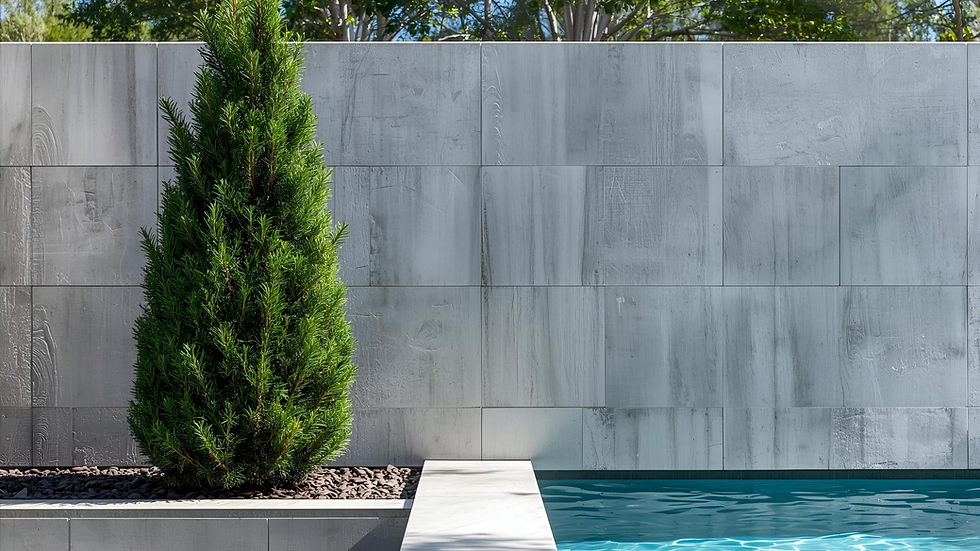
Style Guide 1: Contemporary - Structured Green and Grey Planting
For a clean, modern aesthetic, this guide focuses on structured, evergreen species that maintain sleek lines, minimise maintenance, and are tough enough to withstand full sun exposure in urban yards.
Style Guide 2: Tropical - Lush Foliage and Architectural Form
This style creates a secluded, resort-like oasis. It features bold, architectural foliage that thrives in humidity and shade, while prioritising plants that minimise messy flowers or seeds near the water.

Style Guide 3: Coastal / Beachside / Palm Springs - Drought and Salt Resilient
This is the most climate-resilient and truly low-maintenance pool plants NSW option. It blends water-wise aesthetics with coastal and beachside hardiness, featuring plants tolerant of salt spray and high heat.
3. Integrating Poolside Plants with Decks, Paving & Raised Edges in Salt‑Wind‑Exposed Conditions
Combining planting with hardscape is crucial for achieving a seamless, multi‑functional outdoor living space, especially on steep or undulating coastal sites, where level changes are common. The key to a successful compact design is flow, with planting used to connect the pool area to decks, entertaining zones and utility spaces.

Hardscape Material Suggestions: Paving Safety and Fencing Compliance
Paving Safety (Do's and Don'ts): When selecting natural materials like Limestone, Sandstone, or Marble for the area immediately surrounding the plunge pool, the finish is vital for safety. We strongly recommend non-slip finishes like sandblasted, flamed, or leathered (sometimes called antiqued) textures. These finishes meet the required slip resistance rating for wet areas and stay cooler underfoot. Avoid highly polished or honed finishes, as they become extremely slippery and unsafe when wet, which is unavoidable near a pool.
Fencing Design (Compliance & Aesthetics): For a truly integrated, 'fenceless' look while maintaining compliance, consider incorporating the fence into the pool structure. For example, on the lower, retaining wall side of the pool, a glass or metal fence with compliant gaps and strategic planting along the outside edge can visually soften the barrier. The key is ensuring compliance with the NSW non-climbable zone regulations (300mm/900mm rule) while maintaining visual sight lines.
Flow and Integration with Entertaining Zones
To ensure a cohesive design, use consistent paving materials or decking timbers to lead the eye and foot traffic from the main house to the pool, and then on to the outdoor kitchen or dining area. Planting plays a supporting role here:
Outdoor Kitchen Herb Walls: If your design includes an outdoor kitchen, consider installing a narrow raised planter box or vertical garden for kitchen herbs and edibles (like Basil, Mint, and Rosemary) nearby. This is functional and helps transition the hardscape area into a productive garden space. For natural insect control in your entertaining areas, consider incorporating specific native plants known for their repellent properties.
Creating 'Rooms' with Planters: Use large, architectural planter boxes (containing features like the Gymea Lily or Dragon Blood Tree) to subtly separate the relaxation zone by the pool from the active zone the outdoor kitchen/dining, maintaining flow while defining purpose.

Raised Beds and Drainage:
Raised beds are vital in small yard pool designs. They lift plants above paving, improving drainage and reducing the chance of soil runoff into the pool. This is especially important on sloping sites to control water flow and prevent erosion.
4. Planting Layout Ideas: Maximising Impact in Compact Yards
Successful plunge pool design projects follow simple layout rules to maximise visual impact in compact areas:
L‑Shaped / Corner Pools: Use the perimeter walls for dense screening (such as Melaleuca ‘Space Saver’ or Pittosporum ‘Silver Sheen’), and reserve the exposed corner for low‑level texture (for example, native ginger or Agave geminiflora). This approach balances privacy and openness on compact pool sites while maintaining clear sightlines and manageable planting density.
Vertical Gardens: For narrow blocks, a vertical green wall installed directly behind the pool provides maximum greenery and privacy with zero footprint.
Terraced Planting: On sloping sites, terracing creates dramatic visual layers, allowing cascading groundcovers like Native Pigface to spill over retaining walls, connecting the pool to the wider garden area.
5. Poolside Plant Maintenance Tips & Long-Term Care
To ensure your investment remains low-maintenance, follow these critical long-term care guidelines for effective poolside plant maintenance:
Mulching: Apply thick layers of coarse mulch (like hardwood chips) to all garden beds. This dramatically reduces water evaporation, suppresses weeds, and minimises debris blowing into the pool.
Irrigation: Invest in a smart, sub-surface drip irrigation system, especially for raised beds. Alternatively, for the ultimate in water conservation and self-sufficiency, consider installing a wicking system in large planter boxes or raised beds. A wicking system uses a sealed reservoir at the base to feed water to the soil from below, virtually eliminating water wastage from evaporation.
Safety & Compliance: Regularly prune any screening plants near the fence line to maintain the non-climbable zone (300mm/900mm rule). This ensures your design remains compliant with NSW pool safety regulations.
Tip: Always check NSW pool safety regulations before planting within 900mm of the fence to ensure compliance with the non-climbable zone rules.
Frequently Asked Questions (FAQs) about Plunge Pool Landscaping
Q1: Which poolside plants require the least water in Coastal NSW?
A: Drought-tolerant plants for plunge pools in small yards in coastal area are typically native species. The most water-wise options are groundcovers like Creeping Boobialla and highly salt-tolerant shrubs like Westringia 'Aussie Box' and Flatbush Salt Bush.
Q2: Can I plant trees near my plunge pool without damaging it?
A: Yes, but selection is crucial. You must choose non-invasive species. We recommend Tuckeroo (Cupaniopsis anacardioides) and Tristaniopsis laurina ‘Luscious’ as safe, contained native options, and the Podocarpus elatus as a low-litter exotic feature. Always consult a professional design plan for recommended planting distances (minimium 3-4m).
Q3: How do I make my small plunge pool yard look lush without increasing maintenance?
A: Use strategic layering and high-impact planting in contained areas. Focus on hardy native groundcovers (like Dianella) for texture, combined with a single vertical feature plant (like a Gymea Lily or Dragon Blood Tree) per section. Vertical gardens are also excellent for maximising greenery with low maintenance in a compact space.
Q4: Can I use exotics safely around my plunge pool?
A: Yes, select exotics known for slow growth and low leaf drop, such as Rhaphiolepsis 'Oriental Pearl' (shrub) or the Kentia Palm (palm). Ensure they are planted in contained raised beds or pots to control their size and root system, keeping your plunge pool garden practical and safe.
Q5: What is the main safety regulation for planting near a pool fence in NSW?
A: Safe plants near pool NSW regulations state that plants used for screening near the pool enclosure must be non-climbable. They must be kept 300mm away from the fence on the inside of the pool barrier and 900mm away on the outside of the barrier to prevent children from using them to climb.
Designing a Cohesive Poolside Landscape
Designing the landscape around a plunge pool requires a nuanced understanding of planting behaviour, climate exposure and construction interfaces. When space is limited, success comes from selecting species that balance resilience with scale, and from integrating planting and hardscape so the pool area functions as part of a broader outdoor layout rather than an isolated feature.
By prioritising non‑invasive root systems, low leaf drop and climate‑appropriate planting, plunge pool landscapes can remain functional, low‑maintenance and visually calm over time — even under demanding conditions.


Comments