


Modernising an Old Pool in NSW: A Design‑Led Guide for Ageing Residential Pools
- Kairos Jones - PARC Concepts
- Mar 16
- 10 min read

Updated: May 13
Across NSW, a large proportion of residential swimming pools were constructed during the 1980s and 1990s, meaning many concrete pools are now more than 40 years old and approaching the limits of their original finishes and surrounds.
While most older pool shells remain structurally sound, finishes, equipment, surrounds and safety infrastructure often no longer suit renovated homes, current regulations, or contemporary patterns of outdoor living.
Modernising an old pool is rarely about a single upgrade. It is a process of bringing the pool back into alignment with the site, the landscape and the way the property is used today — particularly on renovation‑heavy blocks, sloping sites and coastal locations common across NSW.
This guide looks at pool modernisation from a design‑led landscape perspective, not a resurfacing‑only lens. It is written for homeowners at the early to mid stage of a renovation journey, before product and construction decisions are locked in.
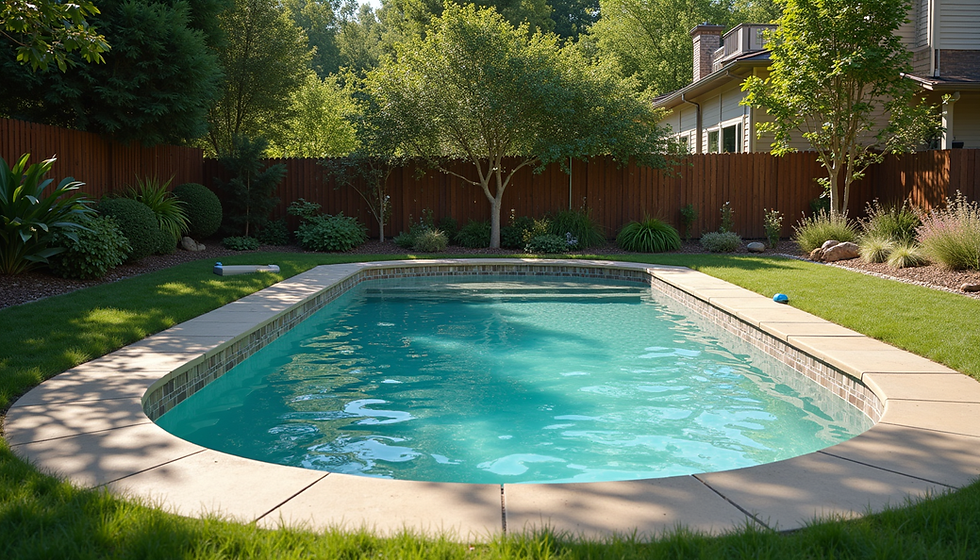
How to Modernise an Old Pool
Modernising an ageing pool starts with understanding what needs to change — and just as importantly, why.
Rather than treating resurfacing, equipment upgrades and landscaping as isolated tasks, a successful pool modernisation considers the pool as part of a broader outdoor system. This approach avoids short‑term fixes and creates a space that performs visually, practically and structurally over the long term.
This way of thinking sits within a wider landscape design process, where the pool, outdoor living areas and planting are resolved together rather than sequentially.
When Maintenance Is No Longer Enough
Routine servicing can keep an ageing pool operational, but there comes a point where maintenance alone no longer addresses underlying issues.
Across residential sites in New South Wales, common signs that a pool has moved beyond maintenance include:
Interior finishes that are stained, rough or breaking down
Cracked or lifting coping and dated waterline tiling
Inefficient or failing filtration, heating or sanitation equipment
Pool fencing that no longer complies with current NSW regulations
Surrounds that have cracked, shifted or become uncomfortable underfoot
A visual disconnect between the pool and the rest of the outdoor space
When several of these issues are present, addressing them individually often leads to a patchwork result. A coordinated modernisation strategy typically delivers stronger outcomes and avoids rework.
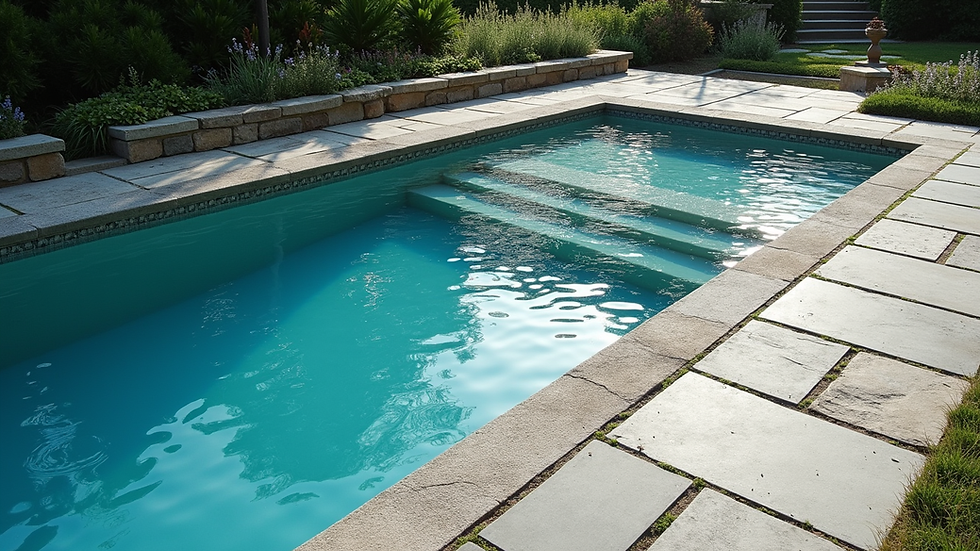
Pool Modernisation in NSW: What Changes the Approach
Pool modernisation is heavily influenced by site conditions rather than pool age alone. On many established residential sites, pools were constructed without consideration for modern finishes, current usage patterns or long-term landscape integration.
Common factors influencing modernisation outcomes include sloping or constrained sites, environmental exposure such as wind or reflected heat, and larger residential lots where scale and visual integration matter as much as function. These conditions often require a more coordinated design approach, resolving the pool, its surrounds, planting structure and circulation as a single system rather than a series of isolated upgrades.
Thinking Beyond the Pool Shell
Many renovation guides focus almost entirely on what happens inside the waterline. While resurfacing and new tiles are important, they represent only part of what makes a pool feel modern and resolved.
A pool is experienced as part of a broader outdoor environment, shaped by:
Decking and hardscape materials
Planting and privacy screening
Levels, access and circulation
Lighting and night‑time use
How the pool is viewed from inside the home
Modernising the interior without addressing dated surrounds often highlights the contrast rather than resolving it.
This is often where landscaping becomes the defining factor — determining whether a modernised pool feels like an integrated part of the property or an isolated upgrade within it.
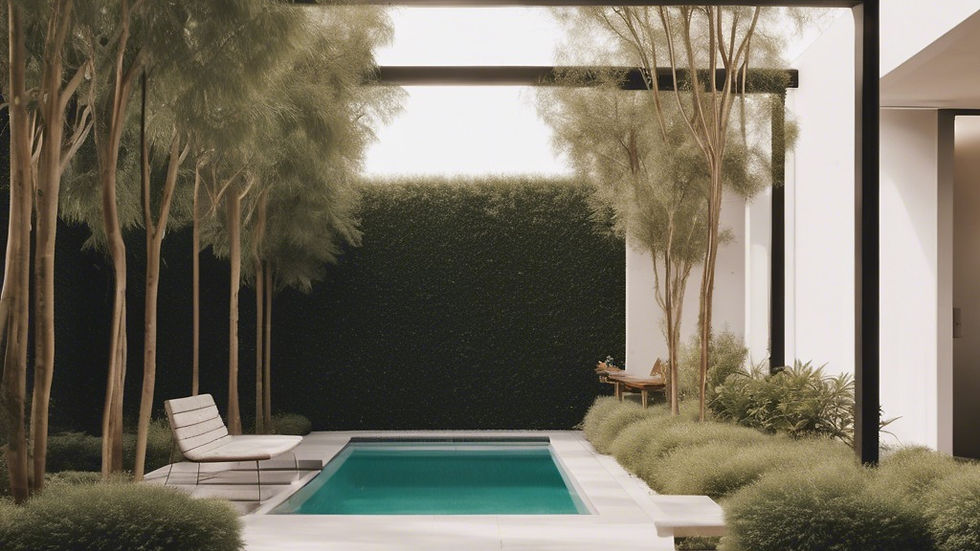
Resurfacing and Interior Finishes
Resurfacing is often the most visible part of a pool renovation, but it should not be treated as a standalone decision.
The interior finish influences:
Water colour and reflectivity
Comfort underfoot
Maintenance requirements
How the pool reads against coping, paving and planting
For NSW homeowners upgrading older pebblecrete pools, this stage often raises more specific questions around suitability and longevity.
If you are weighing alternatives to pebblecrete or comparing pool interior finishes in NSW, our detailed guide explores these options in depth and explains how site conditions influence long‑term performance.
Pool Surrounds and Decking: How the Ground Plane Changes Everything
In many NSW pool renovations, the most disruptive element is not the pool interior — it is the surface that surrounds it.
Older pools were often built with concrete or paving selected for convenience rather than comfort, heat performance or long‑term integration. As these surfaces age, cracking, uneven levels and excessive heat retention become more noticeable, particularly on sloping sites.
A design‑led pool modernisation reassesses surrounds in terms of how they perform, not just how they look.
Key considerations include how heat is absorbed and released during summer, how materials behave when wet, and how the pool edge transitions into outdoor living areas and planting. On sloping blocks, the ground plane also plays a critical role in managing level changes so the pool connects visually and physically with the house and landscape rather than sitting as a separate element.
This is also where many pool renovations fall short. A common issue on older sites is treating surrounds as a cosmetic upgrade, without considering heat retention, drainage or how levels transition across a sloping block. We often see new surfaces installed that look resolved on day one, but quickly feel disconnected from the house or uncomfortable underfoot during summer. Addressing these issues early avoids the need to rework surrounds later as the broader landscape evolves.
Lighting: The Difference Between a Pool You See and a Pool You Use
Lighting is one of the most overlooked aspects of pool renovation, particularly in older NSW pools where illumination was treated as a technical requirement rather than a design tool.
A common oversight in pool renovations is upgrading the pool interior without considering how the space is experienced from inside the house at night, leaving a visually dark or unresolved outlook despite significant investment.
In modernisation projects, lighting fundamentally changes how a pool is used. It affects whether the space feels inviting after dark, how safe movement is around the pool edge, and how the pool reads from inside the house at night.
A considered lighting strategy looks beyond the pool itself. It considers sightlines from living areas, how steps and level changes are revealed after dark, and how planting, fencing and built elements are perceived once the sun sets. This layered approach allows the pool to function as part of the outdoor environment rather than disappearing into shadow.
When lighting is integrated early in the design process, it extends the usable life of the space across evenings and seasons — particularly in NSW climates where outdoor use rarely ends at sunset.
Water Features: Design Intent, Not Add‑Ons
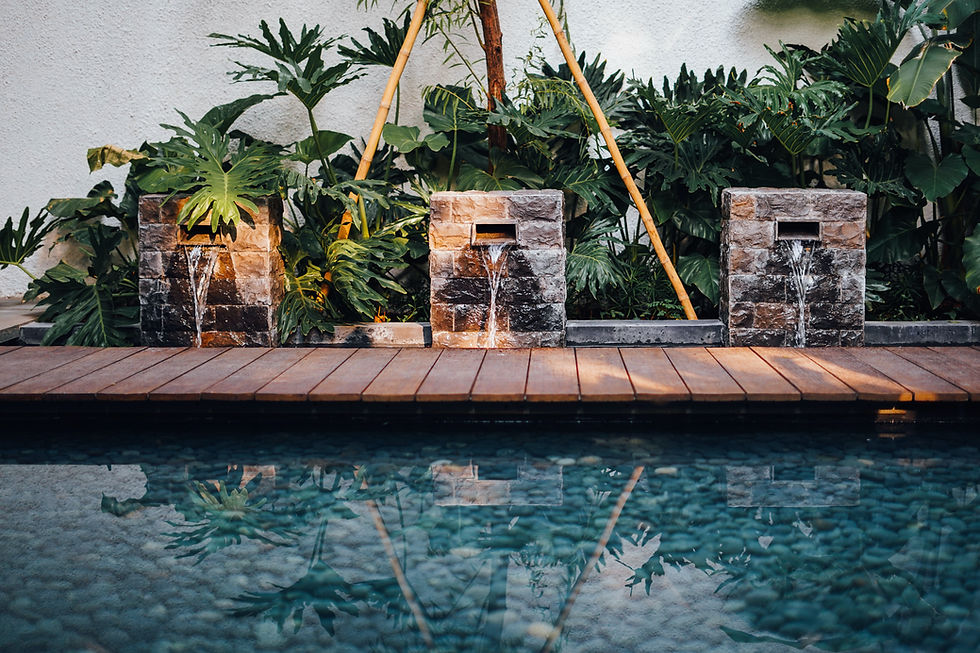
Water features are not a default inclusion in pool modernisation, and they are rarely successful when treated as decorative add‑ons.
In renovation projects, water features are assessed in terms of design intent. The question is not “what can we add?”, but whether movement, sound or visual animation contributes meaningfully to how the space is experienced.
On some sites, a single, restrained feature can reinforce the geometry of the pool or soften a hard edge. On others, still water better suits the surrounding architecture and landscape. The scale of the pool, proximity to living spaces and acoustic impact all influence whether a feature enhances or detracts from the overall result.
This is where restraint matters. In well‑resolved projects, the absence of features is often a deliberate choice rather than an omission.
In renovation projects, adding features without a clear design rationale is one of the quickest ways to introduce visual clutter and maintenance complexity into an otherwise well‑resolved pool.
Landscaping Integration: The Element That Makes the Pool Belong
Landscaping is not a finishing touch in pool modernisation — it is the element that allows the pool to sit comfortably within its site.
Without planting, screening and spatial structure, even a well‑finished pool can feel exposed or disconnected, particularly on sloping blocks, renovation‑heavy suburbs or larger Hunter Region properties.
Effective pool landscaping considers practical constraints alongside visual outcomes. Planting must tolerate reflected heat, splash‑out and local microclimates while also managing privacy, outlook and scale. From a design perspective, landscaping softens the transition between hard surfaces and creates depth, enclosure and hierarchy around the pool.
This is where modern pool upgrades intersect directly with broader Landscape design, and why the two are best resolved together rather than sequentially.
Equipment, Efficiency and Long‑Term Performance
Behind the scenes, equipment upgrades often deliver the greatest improvement in day‑to‑day enjoyment.
Across NSW renovation projects, common upgrades include:
Variable‑speed pumps for improved energy efficiency
Modern sanitation systems for consistent water quality
Heating solutions to extend seasonal use
Lighting upgrades for safety and ambience
When coordinated with resurfacing and landscape works, these upgrades are easier to integrate and less disruptive.
Safety, Compliance and NSW Regulations
Older pools often pre‑date current NSW safety standards. Modernisation is a natural point to review fencing, gates and access.
Glass fencing is commonly selected for contemporary projects, particularly where preserving sightlines is important. Regardless of style, compliance with AS 1926.1 and relevant NSW regulations must be confirmed as part of any renovation scope.
Planning a Staged Pool Modernisation
Staging is one of the most searched aspects of pool renovation, but it is also where many projects lose cohesion.
A staged approach can work well — particularly on established NSW properties — but only when there is a clear overall design intent from the outset. Without this, early decisions around finishes, levels or services often constrain later stages.
In a design‑led framework, staging typically follows a logical sequence:
Early stages address the pool shell, finishes and essential infrastructure
Mid stages resolve surrounds, access and safety elements
Later stages integrate landscaping, lighting and outdoor living spaces
Each stage delivers a functional improvement, but it is the upfront coordination that ensures the pool never feels half‑finished or compromised by earlier choices.
This approach allows investment to be managed over time without sacrificing the integrity of the final outcome.
Hot Tip: A coordinated, design-led approach typically delivers stronger long-term results than isolated upgrades, particularly where multiple trades and site constraints intersect.
Frequently Asked Questions
Can older pools be fully modernised?
In many cases, yes. Provided the shell is structurally sound, finishes, equipment, surrounds and landscaping can all be upgraded as part of a coordinated renovation.
Do I need council approval to renovate a pool?
Approval requirements vary depending on scope. Structural changes, fencing upgrades and boundary conditions should always be reviewed against local council requirements.
How much does it cost to renovate a pool?
Costs vary widely depending on age, site conditions and scope. A site‑specific review is the only reliable way to assess investment.
How long does it take to renovate a pool?
Timeframes depend on the extent of work and site complexity. Projects involving resurfacing alone differ significantly from those including new surrounds, fencing, equipment upgrades and integrated landscaping. Coordination and sequencing play a major role in overall duration.
Can you modernise an old concrete pool?
Yes. Concrete pools are well-suited to modernisation because the shell can be resurfaced, retiled, and replumbed without replacement. Interior finishes such as pebble, glass bead, or quartz aggregate can be applied over the existing structure, and equipment, lighting, and surrounds can all be upgraded as part of the same project.
Is it worth renovating an old pool?
In most cases, yes. A structurally sound pool that has dated finishes, inefficient equipment, or tired surrounds can be transformed at a fraction of the cost of a new build. Pool modernisation also offers the opportunity to improve energy efficiency, safety compliance, and how the pool connects to your broader outdoor living space.
How can I make my old pool look better?
Resurfacing the interior, replacing coping and waterline tiles, upgrading to LED lighting, and refreshing the pool surrounds are the changes that typically have the biggest visual impact. Integrating landscaping around the pool and selecting a cohesive material palette ties the whole space together.
What is the best surface for resurfacing a pool?
The best option depends on the look you want to achieve and the pool's construction. Pebble (exposed aggregate) finishes are the most popular in Australia for their durability and natural appearance. Glass bead finishes offer a smoother feel and subtle shimmer, while fully tiled interiors deliver a high-end result suited to contemporary designs.
What equipment should I upgrade in an old pool?
The highest-impact equipment upgrades are a variable-speed pump (for energy savings), a modern salt chlorinator (for consistent water quality), and a heat pump or solar heating system (to extend the swimming season). Pool automation systems that allow smartphone control of pumps, lights, and heating are an increasingly common addition.
How do you update pool landscaping?
Effective pool landscaping addresses privacy, shade, visual softening, and microclimate. Species selection should account for root behaviour, leaf drop, heat tolerance, and proximity to pool water. A landscape design consultant can plan planting that works with the pool's orientation, surrounding materials, and the overall design intent for the outdoor space.
Can you change the shape of an existing pool?
It is possible but not always practical. Minor shape modifications, such as adding a tanning ledge or reshaping a step entry, are achievable during a renovation. Major changes to the pool footprint involve significant structural work and are often better addressed through a new build. A design consultant can advise on what is feasible for your specific pool and site.
What are the signs your pool needs renovation?
Common signs include stained or rough interior surfaces, cracked or lifting coping, dated fencing that may not meet current safety standards, inefficient or frequently failing equipment, and pool surrounds that have deteriorated or no longer match your home and garden. If multiple issues are present, a coordinated renovation is usually more effective than addressing them individually.
Can you renovate a pool without changing the surrounds?
Yes, it is possible to renovate a pool interior or upgrade equipment without replacing the surrounds, provided they are structurally sound and still suit the site. However, on many older NSW properties, the surrounds are where heat retention, level changes or visual disconnection become most apparent. This is why surrounds are often reviewed as part of a broader modernisation, even if replacement occurs at a later stage.
What adds the most value when modernising a pool in NSW?
Value is rarely created by a single upgrade. In NSW renovation projects, the greatest return typically comes from improvements that enhance usability, safety and integration — such as resolving outdated surrounds, improving energy efficiency, upgrading lighting for night‑time use, and integrating landscaping so the pool sits comfortably within the property. Design coordination across these elements matters more than any one finish or feature.
Considering Your Next Step
For many homeowners, modernising an old pool naturally leads to more specific questions around finishes — particularly when existing pebblecrete no longer suits the home or landscape.
If you are considering a broader upgrade, modernising an old pool is best approached as part of a wider landscape conversation — one that considers the pool, the site and the way the space is used together.
For guidance on pool renovation design, see our Pool Renovation Design service.


Comments