


Where Should You Locate a Swimming Pool? Why Soil and Ground Conditions Matter More Than Layout

When most people think about locating a swimming pool, the decision usually comes down to layout.
Where does it get the most sun?
How does it connect to the house?
Will it look good from the living room?
These are all valid questions — but they are not the ones that determine whether a pool performs well long‑term.
On many residential sites across the Newcastle and Hunter region, the more important question is:
What is happening in the ground beneath the pool?
Because once excavation begins, the “ideal location” on a plan can quickly become the most expensive or complex part of the project.
Most Pool Location Advice Stops at Layout
Typical guidance on pool placement focuses on:
Sun exposure and wind protection
Proximity to the house and outdoor living areas
Views, privacy, and landscaping
Council setbacks and access
These considerations shape the initial concept — but they rely on a key assumption:
That ground conditions are consistent and suitable wherever the pool is placed.
In practice, this is rarely the case.
In more complex sites, multiple constraints can progressively change what is achievable in both design and cost — as outlined in this project overview → Can Site Conditions Increase Pool Costs? A Real Project Breakdown

Pool Location Is a Ground Decision First
A swimming pool is not just a design feature — it is a structure built into the soil.
Its location is directly influenced by:
Soil type and consistency → see Site Analysis and Soil Conditions
Depth of natural material vs fill
Slope and level changes → see Sloping Block Landscape Design
Moisture behaviour and drainage
Interaction with retaining walls and nearby structures → see Retaining Wall Design
These factors don’t just affect construction — they influence:
Where the pool should sit
How it needs to be built
What it ultimately costs
Why Soil Conditions Matter More Than You Expect
On many sites, especially newer estates or sloping blocks, the upper soil layers are not natural ground.
They may include:
Uncontrolled or variable fill
Previously cut and re‑graded material
Organic material from earlier site use
Highly reactive clay
From a design perspective, these differences are not immediately visible.
But once excavation begins, they become critical.
1. Fill vs Natural Ground
The most stable locations for a pool are those founded in consistent natural material.
If a pool is placed over fill:
Support conditions can vary across the base
Settlement and movement become more likely
Additional excavation or stabilisation may be required
It is common for one part of a site to perform well, while another — only metres away — behaves very differently.
2. Investigation Depth vs Actual Excavation Depth
One of the most common mismatches on site is between investigation depth and excavation depth.
Soil reports for residential construction are typically:
Based on shallow boreholes
Intended for slab design, not deeper structures
For example:
A borehole may reach ~1.0m
A plunge pool may excavate to ~1.3m or deeper
This leaves part of the ground unverified before construction begins.
At that point, decisions are no longer theoretical — they are made during excavation.
In some cases, unexpected ground conditions only become apparent during excavation, requiring changes to construction approach — see What Happens When You Hit Rock During Construction?
3. Reactive Clay and Moisture Movement
Many sites across NSW contain reactive clay soils that:
Expand when wet
Shrink when dry
This movement affects:
Pool shells
Surrounding hardscape
Retaining walls
Location matters because:
Trees, drainage, and slope influence moisture variation
Conditions can change significantly across a single backyard

Slope and Retaining Walls Change Everything
On sloping sites, pool location is rarely independent.
It is closely tied to:
Retaining wall systems
Cut and fill transitions
Changes in level across the site
These introduce:
Lateral soil pressure
Movement zones
Complex drainage behaviour
A pool located:
Above a retaining wall behaves differently
Below a slope receives runoff and pressure
Adjacent to retained soil relies on stable backfill and drainage
This is why pool and retaining wall decisions are often interdependent — not separate.
Drainage Often Determines the Right Location
Water movement is one of the most underestimated drivers of pool location.
Poor drainage can lead to:
Water collecting behind retaining walls
Saturation beneath the pool
Uneven ground behaviour over time
A well‑located pool works with the site by:
Allowing surface water to fall away naturally
Avoiding low or collection zones
Integrating with the overall drainage strategy → see Pool Design and Construction Considerations
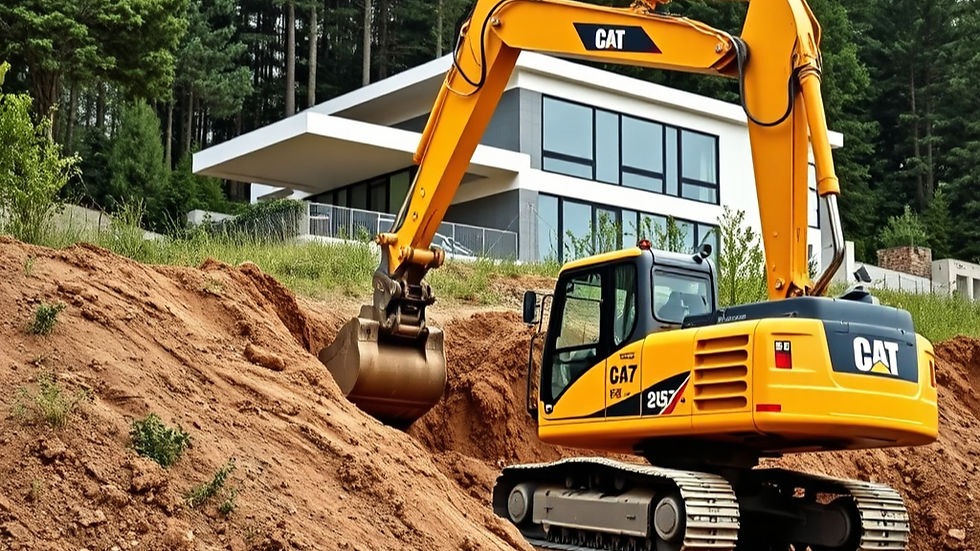
What Happens When Excavation Starts
Regardless of design, the most critical moment is when the ground is exposed.
This is where:
Assumptions are confirmed
Unknown conditions are revealed
Final decisions are made
On site, this typically involves:
Excavating to base level
Assessing soil consistency
Identifying soft or variable zones
A well-performing foundation is:
Uniform
Firm
Consistent across the entire base
If conditions differ from expectations, adjustments may include:
Additional excavation
Replacement with compacted material
Revision to support or drainage
A More Practical Way to Think About Pool Location
Rather than asking:
“Where would the pool look best?”
A more reliable approach is:
“Where will the pool perform best — and integrate cleanly with the site?”
This often means choosing a location that:
Sits within confirmed natural ground
Avoids transitions between fill and clay
Reduces reliance on retaining structures
Works with existing drainage patterns
Allows flexibility during excavation
Design Still Matters — But It Comes After Ground
Layout, aesthetics, and usability remain critical to:
How the space functions
How the pool integrates with the home
The overall experience of the garden
But these decisions should follow an understanding of what the ground can realistically support.
The Role of Site‑Led Decision Making
Good pool location is not a fixed answer — it is a process.
It involves:
Initial layout based on design intent
Review of available soil and site data
Understanding slope, fill, and structural constraints
Adjustment based on construction reality
This approach helps reduce:
Unexpected costs
Over‑engineering
Reactive decisions during construction
Final Thoughts
The best location for a swimming pool is not always the most obvious one on a plan.
It is the location that:
Works with the ground conditions
Integrates with the site as a whole
Can be built efficiently and reliably
In many projects, the difference between a straightforward build and a complex one comes down to this early decision.
Not just where the pool fits —but how the site behaves beneath it.
This becomes particularly important on sites where conditions either affect feasibility early, or change during construction — as shown in the related project examples above.
If you are planning a pool and want to understand how your site conditions may affect location, design, or construction, see Pool Design and Construction Considerations.


Comments