


Specialists In Swimming Pools & Landscape Designs On Slopes & Large Acreage Blocks

Landscape Design +
Project Management


Townhouse & Multi‑Dwelling Landscape Documentation NSW
Coordinated landscape documentation that supports clear DA assessment and, where relevant, CDC pathway requirements across NSW
Townhouse and multi‑dwelling landscape documentation supports residential development assessment where the external environment needs to be clearly coordinated across architectural, civil and planning inputs.
This sits within our broader Landscape Documentation for Residential Developments NSW service, where we support residential development projects that require consultant alignment, legible site relationships and consistent documentation for assessment.
These projects often sit where density increases, site constraints tighten and coordination issues become more visible. While the landscape scope itself may be modest, inconsistencies between drawings can lead to RFIs, clarification requests or post‑approval redesign.
Our role is to ensure the landscape scope is proportionate, readable and aligned within the broader consultant set, so external works can be assessed without unnecessary assumption or reinterpretation.
Why landscape documentation matters for townhouse and multi‑dwelling developments
Townhouse and multi‑dwelling projects are often treated as straightforward from a landscape perspective. In practice, they are coordination‑sensitive.
Access, private open space, deep soil, service zones, boundaries and levels often compete within a tighter site structure. Where landscape, architectural and civil information are not aligned, assessment officers may need to seek clarification before the proposal can be read consistently.
A clear, proportionate landscape package helps make the external environment legible across the consultant set, reducing friction during assessment and limiting avoidable post‑approval changes.
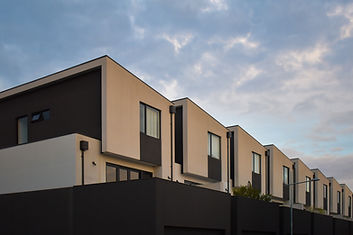
Development pathways and documentation requirements
Townhouse and multi‑dwelling projects are often treated as straightforward from a landscape perspective. In practice, they are coordination‑sensitive.
Access, private open space, deep soil, service zones, boundaries and levels often compete within a tighter site structure. Where landscape, architectural and civil information are not aligned, assessment officers may need to seek clarification before the proposal can be read consistently.
A clear, proportionate landscape package helps make the external environment legible across the consultant set, reducing friction during assessment and limiting avoidable post‑approval changes.
Common coordination pressures in townhouse and multi-dwelling DAs
From experience, coordination issues most commonly arise when the external works are described differently across consultant drawings
-
Landscape drawings are difficult to read alongside civil levels and access plans
-
Levels are not resolved consistently across landscape, civil and architectural drawings
-
Deep soil and planting zones compete with services or built form
-
Private open space and boundary treatments are interpreted differently across disciplines
-
Landscape scope is over- or under-represented relative to development scale
These issues rarely prevent assessment outright, but they commonly generate RFIs, clarification requests or post‑approval amendments.

How we approach DA landscape plans for townhouse and multi-dwelling developments
We approach landscape documentation as part of the broader development package, not as an isolated design drawing.
For townhouse and multi‑dwelling developments, the focus is on how external works are interpreted across the consultant set. This includes access, circulation, private and communal open space, deep soil, service zones, boundaries and interfaces with adjoining properties.
The aim is to prepare drawings that are proportionate to the development scale and can be assessed without excessive cross‑checking, assumptions or clarification.
Landscape documentation within the Development Application
Within a Development Application, landscape documentation explains how the site functions externally.
For townhouse and multi‑dwelling developments, this includes how access, circulation, private and communal open space, deep soil, boundaries and adjoining interfaces are resolved alongside architecture, civil engineering and planning inputs.
The role is not to over‑specify the landscape response, but to ensure external works are represented at the right level for assessment.
This becomes more important where the site is affected by additional constraints. In townhouse and multi‑dwelling projects, this may include heritage‑affected developments, bushfire‑prone land or flood‑affected sites, where planning controls and site behaviour add another layer of scrutiny to how external works are read.


Post-approval and DA landscape amendments
Following approval, landscape documentation may need to be revisited to address consent conditions, clarify assessment intent or align with updated consultant inputs.
Where we remain involved, we assist with DA landscape amendments and post‑approval documentation while maintaining alignment with the approved scheme.
Projects with clear DA-stage coordination typically require fewer amendments and move more smoothly through later certification and delivery stages.
Consultant coordination and documentation alignment
We work alongside architects, civil engineers, planners and project managers delivering townhouse and multi-dwelling developments.
Our documentation is prepared with peer review and council scrutiny in mind, recognising that drawings are tested from multiple directions, not only by assessment officers.
Breakdowns most often occur due to timing gaps between disciplines, undocumented assumptions or unclear scope boundaries. This is particularly relevant in medium-density infill and small multi-residential developments, and in smaller-scale projects such as dual occupancy landscape documentation for DA in NSW projects, where multiple consultants are working within tight site constraints.
Our role is to reduce this friction and provide a steady point of alignment across the DA process.
This is particularly relevant in medium‑density infill and small multi‑residential developments, where multiple consultants work within tight site constraints.
Where the project is smaller in scale, the scope may sit closer to Dual Occupancy Landscape Documentation NSW. Where the proposal involves multi‑level residential buildings or Class 2 apartment development, it is more appropriately considered under Class 2 DA Landscape Documentation NSW.


Related residential development services
This service commonly sits alongside:
Service area — New South Wales
We provide landscape documentation support for townhouse and multi‑dwelling developments across New South Wales, working with consultant teams in metropolitan, regional and growth‑area contexts.
Engagement is guided by project type, regulatory context, site complexity and consultant coordination requirements rather than postcode alone.
Strengthen Coordination Across Your DA Consultant Set
If you are working on a townhouse or multi‑dwelling development and need the landscape scope to align clearly with architectural, civil and planning inputs, we can review the site context, consultant coordination requirements and approval pathway to confirm whether this approach suits the project.
Discuss a townhouse or multi‑dwelling project
View Landscape Documentation for Residential Developments NSW
Frequently asked questions
When are landscape plans required for townhouse and multi-dwelling Development Applications in NSW?
Landscape plans are typically required wherever external works form part of the Development Application. For townhouse and multi-dwelling developments, this commonly includes access, private and communal open space, boundary treatments and site interfaces assessed alongside architecture and civil documentation.
How do DA landscape plans support assessment for townhouse and multi-dwelling projects?
DA landscape plans help assessment officers understand how the site functions externally. Clear, coordinated landscape documentation reduces reliance on assumptions and cross-referencing, which in turn can limit RFIs and clarification during assessment.
What needs to be included in a landscape plan for a townhouse or multi-dwelling DA?
Landscape plans for DA submission need to clearly show how external works relate to built form, access, levels and boundaries. The emphasis is on coordination and legibility rather than decorative detail, so the proposal can be interpreted consistently across the consultant set.
How are deep soil requirements typically addressed in townhouse and multi-dwelling developments?
Deep soil areas are often constrained on townhouse and multi-dwelling sites and must be coordinated carefully with buildings, services and levels. Landscape documentation helps make these relationships legible so they can be assessed without conflicting interpretations.
How does this differ from dual occupancy landscape documentation?
Townhouse and multi‑dwelling developments introduce shared access, higher density, deeper coordination between disciplines, and more complex relationships between open space, services and boundaries. The documentation focus remains proportionate, but the number of interfaces increases.
At what stage is it best to involve a landscape consultant on a townhouse or multi-dwelling DA?
Landscape input is most effective when it occurs early enough to align with architectural and civil documentation. Early coordination helps avoid later clarification, DA landscape amendments or redesign once the application is under assessment.